Section 02

Market Structure Analysis

Adidas Samba operates in monopolistic competition: many firms sell similar sneakers, but each brand attempts to create preference through design, history, image, and consumer perception.

2.1 Number of firms

Monopolistic competition

Monopolistic competition is a market structure where many firms sell similar but differentiated products. This gives each firm some price-setting power while keeping entry and exit possible in the long run.

Large number of competing firms

No single firm dominates the full sneaker market

Some price control through brand differentiation

Competition through design, image, heritage, and promotion

Relatively free entry and exit in the long run

2.2 Type of product

A differentiated product

Adidas Samba stands out through brand identity, historical legacy, and functional design qualities. Even though other firms sell close substitutes, Samba is not perceived as identical by consumers.

2.3 Barriers to entry

Low legal barriers, high brand challenge

New firms can enter the sneaker market, but building the same brand trust, cultural relevance, and design recognition is difficult. This creates competitive pressure without making Samba fully replaceable.

When firms earn economic profit

New competitors enter with similar lifestyle sneakers, increasing competition and reducing long-run profit.

When firms experience losses

Some brands leave or reduce investment, lowering competition and allowing prices to recover.

2.4 Degree of pricing power

$76-$149 USD

Samba has meaningful pricing power because its design and brand heritage are recognizable. That power is limited by close substitutes from Nike, Converse, Puma, and New Balance, so the strongest strategy is an accessible premium price rather than an extreme luxury price.

Pricing factor

Accessible premium

Samba can charge a premium without moving into the highest luxury sneaker range.

Pricing factor

Differentiated design

The T-toe, gum sole, and terrace heritage make the product less interchangeable.

Pricing factor

Substitute pressure

Nike, Converse, Puma, and New Balance limit Adidas from raising prices without restraint.

Market shelf

Why substitute pressure limits pricing power

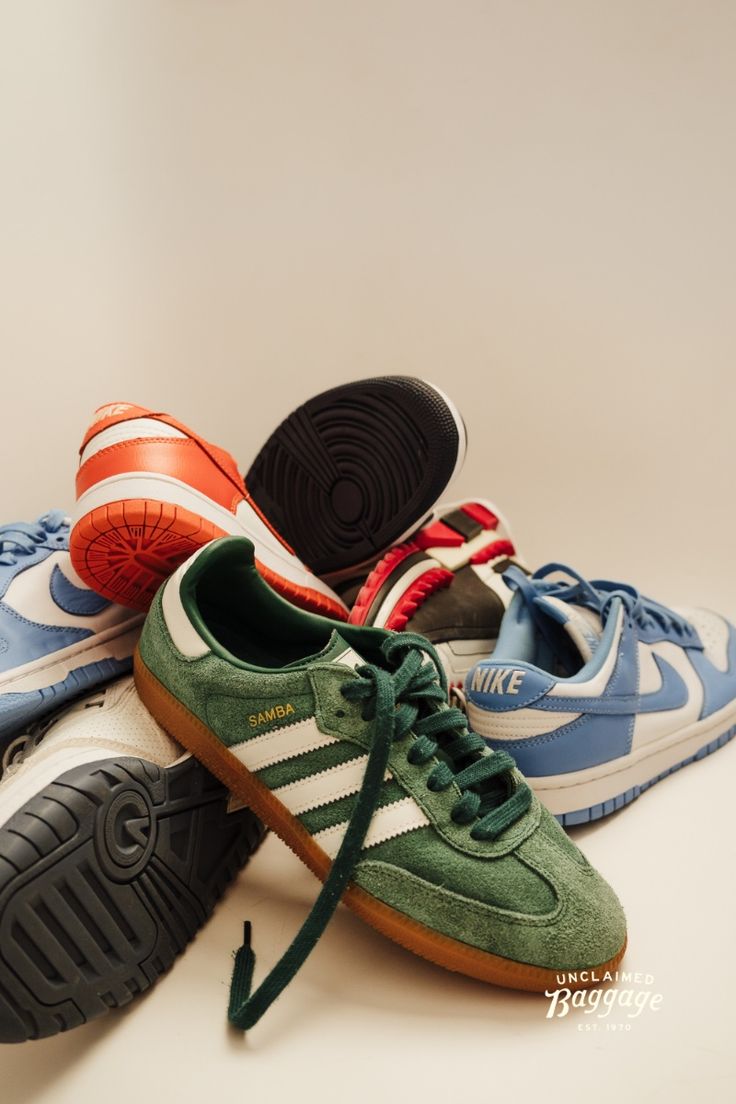
Monopolistic competition is easiest to see visually: the customer faces a shelf full of similar sneakers, so Samba has to win through design identity and brand meaning.

Adidas Originals product shelf visual

Brand shelf

Adidas protects Samba by placing it inside a broader Originals lifestyle universe.

Men's sneaker assortment visual

Substitute pressure

Consumers compare Samba with many casual sneaker alternatives before buying.

Adidas original trainers visual

Internal competition

Even within Adidas, similar retro models compete for attention and budget.

Lifestyle sneaker shopping visual

Retail context

Shelf presence and product photography influence perceived value at the moment of choice.

Competitor comparison section

Adidas Samba vs Nike, Puma, Converse, and New Balance

The matrix compares price range, brand value, product differentiation, elasticity profile, and symbolic/social value.

Average competitor band

$55-$150

Samba brand value score

95 / 100

Pricing implication

High resilience

Product Price range Brand value Product differentiation Elasticity of demand Symbolic/social value
Adidas Samba $76-$149 95/100 Terrace heritage, gum sole DNA, minimalist profile Low-Medium
Very high
Nike Cortez $75-$110 90/100 Retro running identity and Americana styling Medium
High
Puma Palermo $70-$110 78/100 Football-inspired silhouette with trend collabs Medium-High
Medium-High
Converse Chuck Taylor $55-$90 88/100 Iconic canvas model and everyday universality High
High
New Balance 550 $110-$150 86/100 Retro basketball shape with premium lifestyle cues Medium
Medium-High